Strength Training as a Long-Term Investment
Why resistance training in midlife is less about appearance and more about preserving independence decades later.

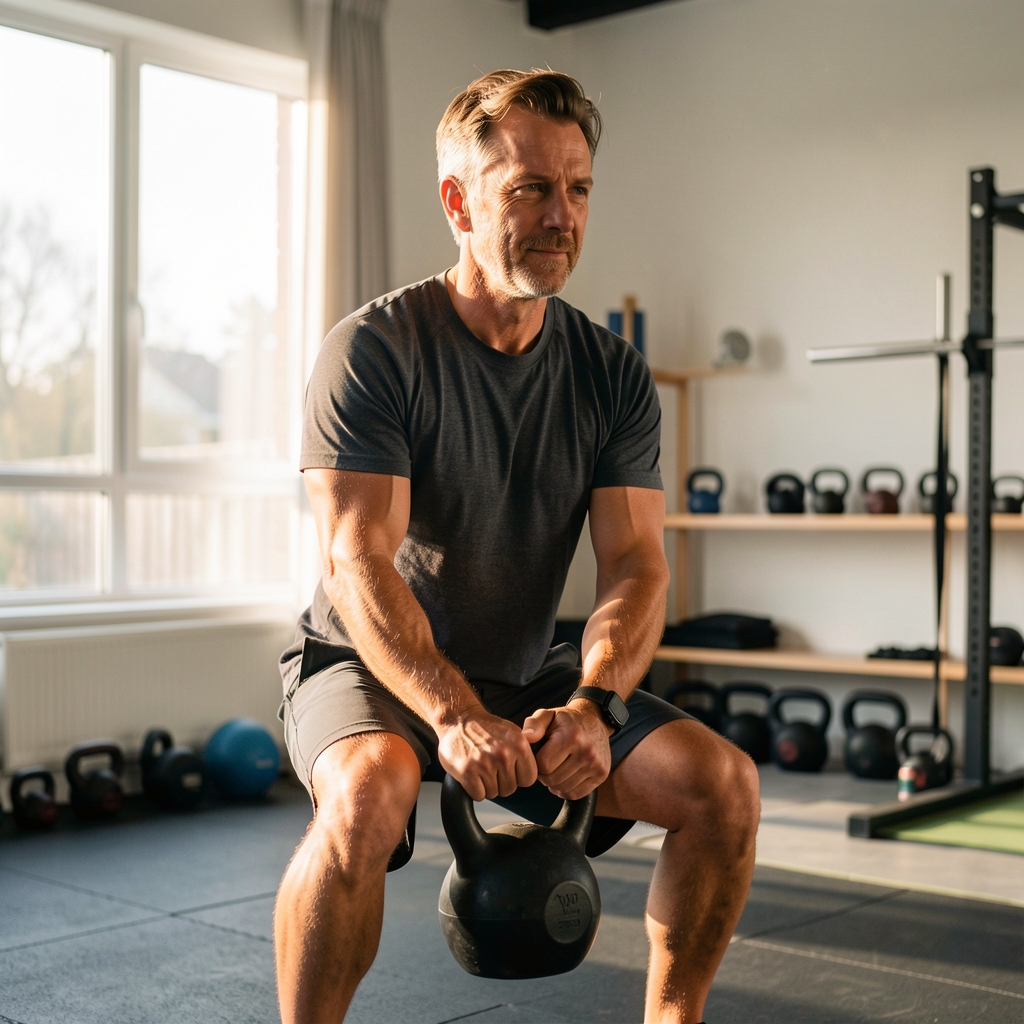
Ask a man in his twenties why he lifts weights and the answer is usually about appearance or sport. Ask the same question of a man in his late forties who has kept it up, and the answer is more often about function — carrying his own luggage, getting up off the floor without using his hands, keeping pace on a hike with younger colleagues. That shift in framing reflects something real in the research: the primary long-term benefit of resistance training after 30 is not aesthetic. It is the preservation of muscle mass, bone density and functional capacity that would otherwise erode gradually with age.
The Slow Erosion Nobody Notices
Sarcopenia — the age-related loss of muscle mass and strength — does not announce itself. Research on untrained adults suggests measurable strength decline can begin as early as the thirties and accelerates further after 50 without intervention. The practical consequence shows up decades later: difficulty rising from a low chair, reduced walking speed, and a higher risk of falls and fractures in older age. Resistance training is the most consistently effective countermeasure identified in the literature, more so than diet or cardiovascular exercise alone.
What makes this particularly relevant for Glimmer's readers is the timing. The muscle and bone density you carry into your sixties and seventies is substantially determined by what you do with it in your thirties, forties and fifties — not by anything you can do retroactively once decline has already progressed. Starting, or continuing, a structured strength program now is less about this year and more about the decades that follow it.
"The best predictor of functional independence at seventy is strength at fifty — not the other way around."
What "Enough" Training Actually Looks Like
Contrary to the volume many fitness influencers suggest, the evidence for minimum effective training load is more modest than expected. Studies on resistance training frequency generally find that two to three structured sessions per week, covering the major muscle groups with enough load to approach fatigue within eight to fifteen repetitions, produce most of the measurable strength and hypertrophy benefit associated with higher-volume programs. For a man balancing work and family, this is an achievable target rather than an aspirational one.
Our contributing physiotherapist, Bambang Wirawan, notes that consistency over years matters considerably more than any single program's intensity: "I have seen men make more durable progress training moderately three times a week for five years than men who train intensely for three months and then stop because of an avoidable injury or burnout."
Injury Prevention Is Part of the Program, Not an Afterthought
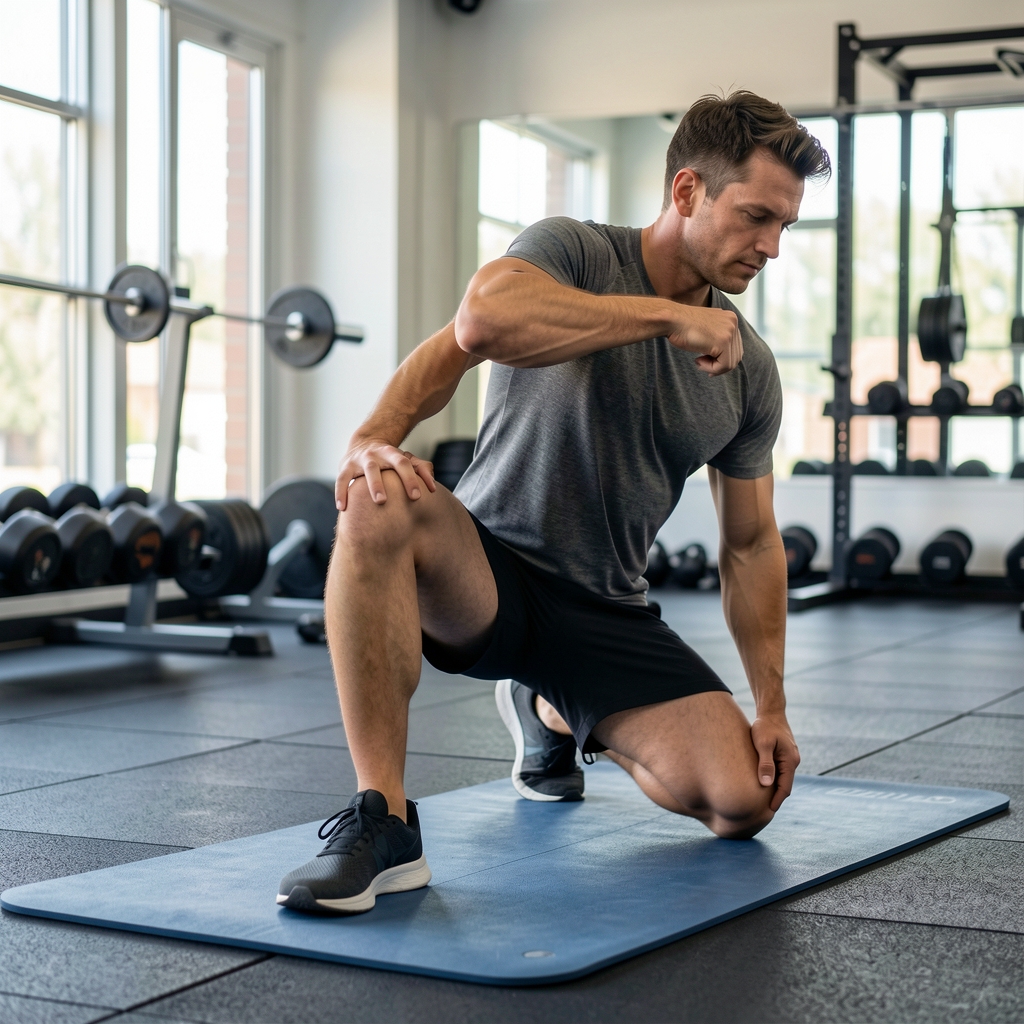
The research on training-related injury in adults over 35 points consistently to a handful of preventable causes: inadequate warm-up, poor load progression, and ignoring early joint or tendon discomfort rather than adjusting the program. A program that accounts for these factors from the outset — gradual load increases, attention to joint range of motion, and built-in recovery days — is more likely to still be running in five years than one designed purely around maximum short-term intensity.
How This Connects to the Rest of the Picture
Strength training does not operate in isolation. Recovery quality depends heavily on sleep, covered in our sleep and recovery pillar, and the protein intake needed to support muscle maintenance is discussed in our nutrition pillar. Readers interested in how training interacts with hormonal markers may also want to read our hormonal health coverage.
A Reasonable Starting Point
For a man new to structured resistance training, or returning to it after a long break, the research generally supports starting with a qualified assessment — from a physiotherapist or certified trainer familiar with working with adults over 30 — before progressing load aggressively. This is not a caution born of excessive risk-aversion; it is simply the approach most likely to produce a program you are still following in several years, which is ultimately what the research says matters most.
This article reflects a review of peer-reviewed resistance training and sarcopenia research current as of its publication date and does not constitute individual medical or training advice. See our medical disclaimer for more detail.
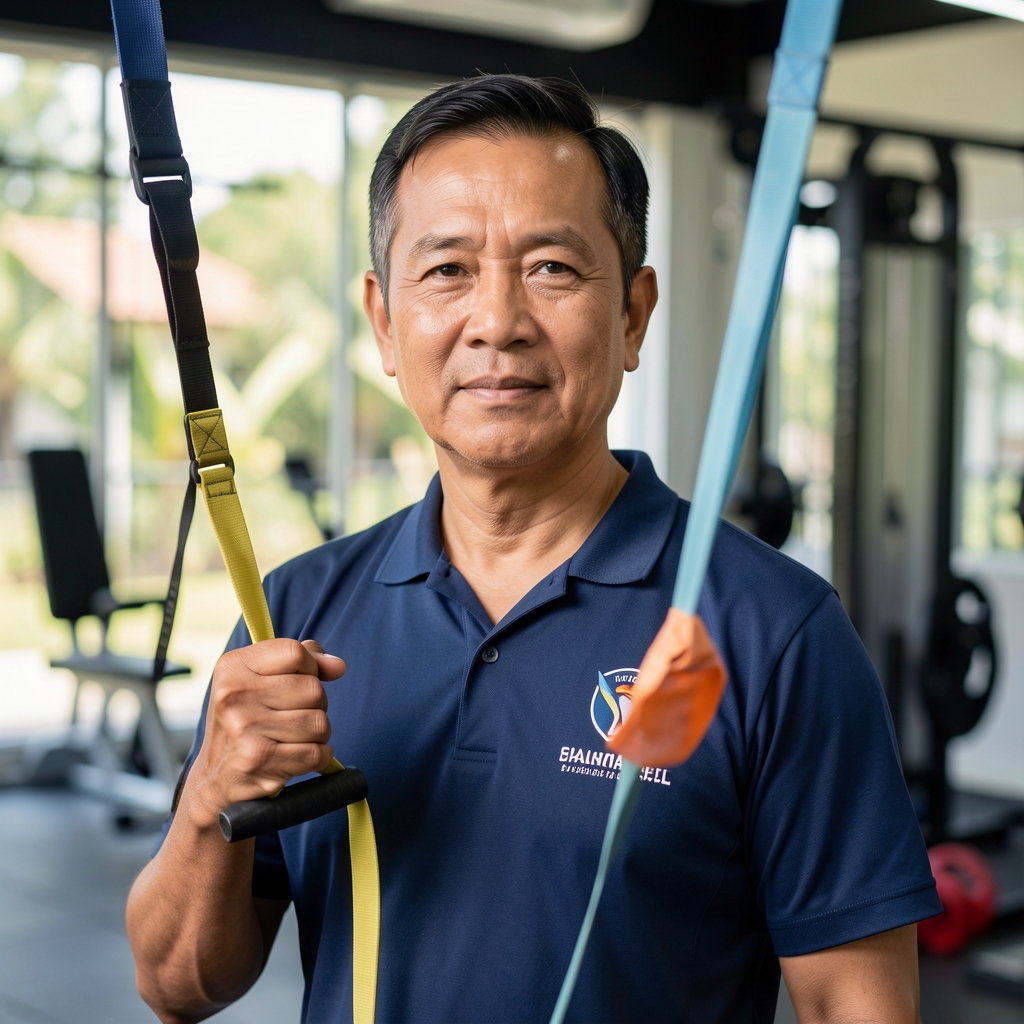
Bambang Wirawan, SPt
Contributing Physiotherapist, Glimmer. Twelve years' clinical experience working with recreational and competitive athletes.